
The smart water meter market is experiencing an explosion.
2017-05-25
【 Summary 】 Currently, the intelligence rate of water meters in our country is not high
Currently, the intelligence rate of water meters in our country is not high, with 90% of water meters still relying on manual reading, which has many drawbacks. According to the American research institution Forrester, the industrial value brought by the Internet of Things (IoT) will be 30 times greater than that of the Internet, and the IoT will become the next trillion-level information industry business. Under IoT technology, smart water meters depend on the rapidly developing technological network era. Smart water meters and systems have incomparable advantages over traditional water meters, mainly reflected in the following aspects: (1) remote control; (2) water price measurement; (3) electronic billing; (4) data platform; (5) flexible management; (6) abnormal consumption analysis; (7) entrusted management. At the same time, national policies and government promotion of smart water management and tiered water pricing bring new development momentum to smart water meters. To implement the tiered water pricing policy, accurate measurement, timing, and billing of the scientific mechanism of tiered water pricing, as well as reasonable collection of water fees for each water consumption segment, are key to implementing the tiered water pricing mechanism, which requires the support of smart water meters.
The water meter industry is continuously evolving and upgrading, and wireless remote transmission water meters are the future trend.
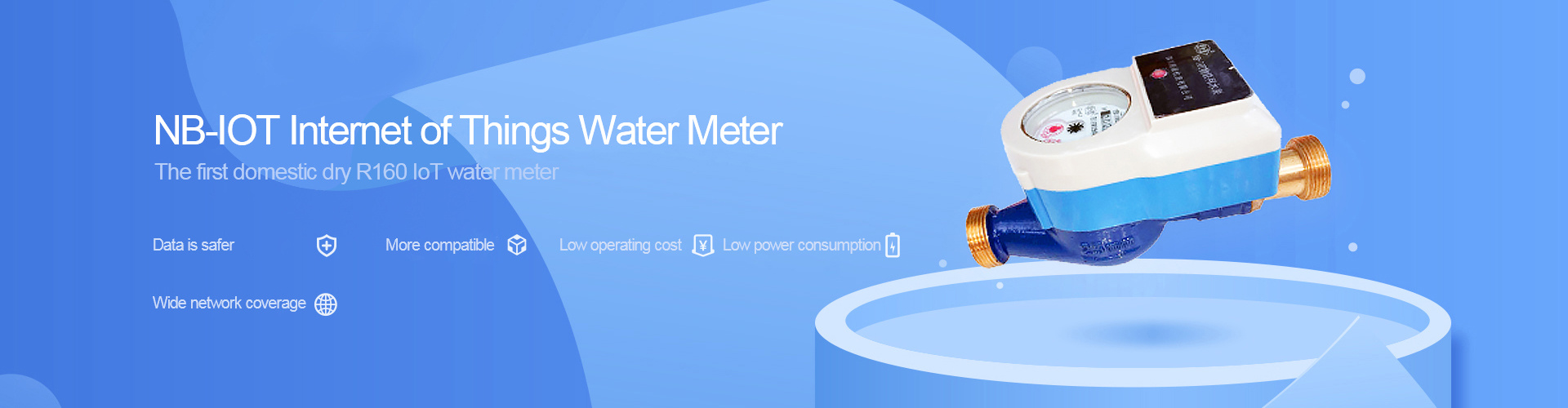
With the joint promotion of smart water management and tiered water pricing, our country's water meters have evolved from non-smart mechanical meters to IC card smart meters and photoelectric direct-reading smart water meters, which have become the main products in the market, eventually transitioning to wireless remote transmission water meters. Mechanical meters are cumbersome for residential communities of a certain scale, where residents are dispersed across different units, making on-site reading and fee collection quite troublesome. The IC card prepaid smart water meter has adopted a modern management model of "pay first, use water later," achieving electronic and intelligent management of water fees. The photoelectric direct-reading water meter uses photoelectric direct-reading technology to read the data from the dial, reducing reading errors to zero compared to traditional pulse meters, and it usually does not require power, only needing power during reading or valve operation. The wireless smart water meter reading system is an emerging and advanced reading method that integrates the most advanced computer and communication technologies today. In current industrial and daily life, short-range wireless communication technologies mainly include Wi-Fi, Bluetooth, infrared, UWB, ZigBee, etc., all of which share the common disadvantage of short transmission distances, limiting their broader application. In the face of the rapid growth of the scale of connections between objects, there are multiple technical standards for low-power wide-area networks dedicated to the IoT, with LoRa, Sigfox, and NB-IOT standing out.
The layout of smart water meters at home and abroad has been in place for many years, and the future market scale is enormous.
As the global water scarcity problem becomes increasingly severe, smart water meters are being widely used to reduce water resource waste, improve management efficiency, and save labor costs. The main market for this technology is concentrated in developed regions led by North America and Europe. In developing regions, the application of smart water meter devices is still generally in the pilot stage. In the domestic market, the joint promotion of tiered water pricing and smart water management will lead to explosive growth in smart water meters. The smart water meter industry is expected to move towards an oligopolistic competitive situation in the future, with large water meter companies likely to stand out and continue to enjoy the industry's high prosperity. The global smart water meter market has steadily grown in recent years, with the total market size exceeding $3 billion in 2012, and it is expected to maintain a compound growth rate of over 10% within five years, achieving total revenue of over $5 billion by 2017. Based on the current 350 million urban users of smart water meters in our country, the potential market capacity may reach a scale of 100 billion yuan.
Next Page

■
Notice of Admission Approved by the Water Meter Working Committee of the China Metrology Association
Notice of Admission Approved by the Water Meter Working Committee of the China Metrology Association
-
2021-09-15
■
The technical status and development direction of remote water meters
The current status and development of pulse remote water meters. Firstly,
■
On April 15, 2020, a work meeting on the construction of party conduct
■
In April, the Ganzi Plateau is still immersed in the chilly spring. In two months
■
On April 9, the Executive Deputy Commander of the Provincial Flood Control
■
The Water Resources Department has arranged and deployed the flood safety work for reservoirs.
In order to deeply implement the important speeches and instructions
national customer service hotline:028-82420313Address: Jiulian Village, Yongshang Town, Xinjin District, Chengdu City, Sichuan Province
Copyright©2025 Sichuan Fuxing Instrument Co., Ltd. All Rights Reserved Website:300.cn Privacy Policy

SAF Coolest v1.2 设置面板 GAGSE-ZGYF-JSSAE-ASW
无数据提示
Sorry, the current column has no content for the time being.!
You can view other columns or returnHome Page